
Handling HOA Fence Permit Requirements: A 2026 Guide
Table of Contents
- Understanding HOA Fence Rules and Where to Find Them
- The Difference Between HOA Approval and Local Building Permits
- Building Your HOA Fence Application Checklist
- Securing Your HOA Fence Approval Letter Template and Documentation
- Property Line Verification and Fence Installation Property Line Survey Requirements
- Fence Permit Inspection Requirements and Compliance
- What to Do If Your HOA Denies Your Fence Application
- Frequently Asked Questions
Last Updated: October 18, 2026
Understanding HOA Fence Rules and Where to Find Them
HOA fence rules protect community aesthetics, property values, and consistency. They live in three documents: your CC&Rs (Covenants, Conditions, and Restrictions), the HOA bylaws, and the architectural guidelines.
Request copies from your HOA board or management company; most post them online.
The architectural review committee (ARC) enforces these rules. Ask management for recently approved projects or denials to gauge current standards and your odds.
The Difference Between HOA Approval and Local Building Permits
HOA approval is not a building permit. HOA approval is private contract enforcement: the architectural review committee (ARC) checks your fence against the CC&Rs and architectural guidelines. A government permit is a public safety and zoning step: your city or county checks height, setbacks, property lines, right-of-way, and code compliance. You generally need both, and neither substitutes for the other.
A permit decision tree you can actually run
Use this sequence to see what your project triggers. Rules vary by jurisdiction, so confirm each step with the named office.
- Start with the HOA documents. Confirm whether the ARC requires written approval before any work and whether it requires proof of a municipal permit as a condition of approval.
- Check city requirements. Search your building department or permit portal for "fence permit" and "residential fence." Ask: (a) Is a permit required at or below my height? (b) Is a plot plan or survey required? (c) Is a post-installation inspection required?
- Check county requirements if you are in an unincorporated area. Outside city limits, the county building or planning department is the authority. Confirm whether county setback and height rules differ from the adjacent city.
- Check state-level rules only where they exist. Most fence regulation is local, but some states impose requirements for pool barriers, coastal zones, or historic districts. Ask whether any state or overlay rules apply to your lot.
- Check HOA-specific overlays. Even after city and county sign off, the HOA may impose stricter height, material, or color limits. The stricter rule controls.
When a permit, inspection, or variance applies
- Permit likely required: fences above the local height threshold, in a front yard or corner-lot visibility triangle, enclosing a pool, in a floodplain or easement, or where a survey is required.
- Inspection likely required: most permitted fences get a final inspection confirming height, setback, and no encroachment on right-of-way or utility easements. Ask whether the inspector needs the fence complete or just the posts set.
- Variance likely required: if your fence cannot meet a setback, height, or sight-distance rule, you may need a variance or administrative adjustment from the zoning or planning office. It is a separate public process with its own fee and timeline, and HOA approval does not waive it.
Sequencing the two approvals
A workable order: (1) confirm HOA rules and submit the ARC application; (2) get written HOA approval; (3) apply for the municipal permit using the approval letter as supporting documentation; (4) install only after the permit is issued; (5) schedule the inspection. Some jurisdictions allow simultaneous applications, and some HOAs won't review an application without a permit number. Ask both offices which order they prefer before you pay any fee.
Fees and timing to plan around
Government permit fees for residential fences are modest but vary widely, and HOA application fees range from none to a few hundred dollars. Get each office's current fee schedule in writing rather than budgeting from a national average. For timing, plan for the HOA review (often 30 to 45 days, longer in peak season) plus the municipal review (same-day over-the-counter issuance to several weeks for a full plan review).
Building Your HOA Fence Application Checklist
A strong HOA fence application proves you read the rules and gives the architectural review committee (ARC) everything it needs to say yes without a second round of questions. Confirm each item against your specific CC&Rs and architectural guidelines, because associations differ.
The submission checklist
- Property address, lot number, and subdivision name
- Homeowner name, mailing address, email, and phone
- Proposed fence material, specified precisely (e.g., "pressure-treated pine privacy fence" rather than "wood")
- Fence height in feet and inches, for each run (front, side, back)
- Color and finish (stain, paint, manufacturer color name and code if available)
- Site plan with measurements (see below)
- Photos of the current property from multiple angles
- Photos of comparable fences already approved in the community
- Contractor name, license number if required locally, and certificate of insurance, or a signed statement that you are installing it yourself
- Proposed start and completion dates
What the site plan must show
A hand sketch is often acceptable if it's to scale enough to read. Include:
- Property boundary lines with dimensions
- The proposed fence line, drawn in a distinct color or line weight
- Distance from the fence to each property line (setbacks), measured in feet and inches
- Location of the house, garage, driveway, pool, and any accessory structures
- Gates and their widths
- North arrow and the street name
- Any easements or utility corridors crossing the fence line
A written request template you can adapt
Dear Architectural Review Committee,
I am requesting approval to install a [material] fence at [address, lot number]. The fence will be [height] tall, finished in [color/finish], and located as shown on the attached site plan. The proposed fence line is [distance] from the [side/back] property line and does not cross any easement. I have attached photos of the property, photos of comparable approved fences in the community, and [contractor information / self-install statement].
Contractor details the ARC commonly asks for
If a contractor is installing the fence, include the business name, license number if required, a certificate of insurance showing general liability coverage, and a point of contact. Some associations also want the contractor to sign an acknowledgment of community rules such as work hours and debris removal. If you're installing it yourself, say so in writing and confirm whether the HOA requires anything additional.
Submission mechanics that prevent delays
Submit through the channel the HOA specifies (portal, email, or mail) and keep a dated copy of everything you send. Ask for written confirmation of receipt and the date the review clock starts. If a stated response deadline passes, follow up in writing. Pay any fee by a method that gives you a receipt.
After you submit
Keep the submitted packet, receipt confirmation, and committee correspondence in one folder, digital and physical. If the committee approves with conditions, acknowledge each in writing before you begin work, that paper trail protects you if a later dispute arises about what was approved.
Securing Your HOA Fence Approval Letter Template and Documentation
The architectural review committee typically has 30 to 45 days to respond, though timelines vary by HOA.
When approval arrives, you'll receive a written approval letter. Keep it with your project records.
If your application is approved with modifications, review the changes carefully.
The approval letter serves as proof of HOA compliance when you apply for a municipal building permit, which many local building departments require.
Property Line Verification and Fence Installation Property Line Survey Requirements
Before installation, verify your property lines. Many fence disputes arise from incorrect assumptions about where boundaries actually are.
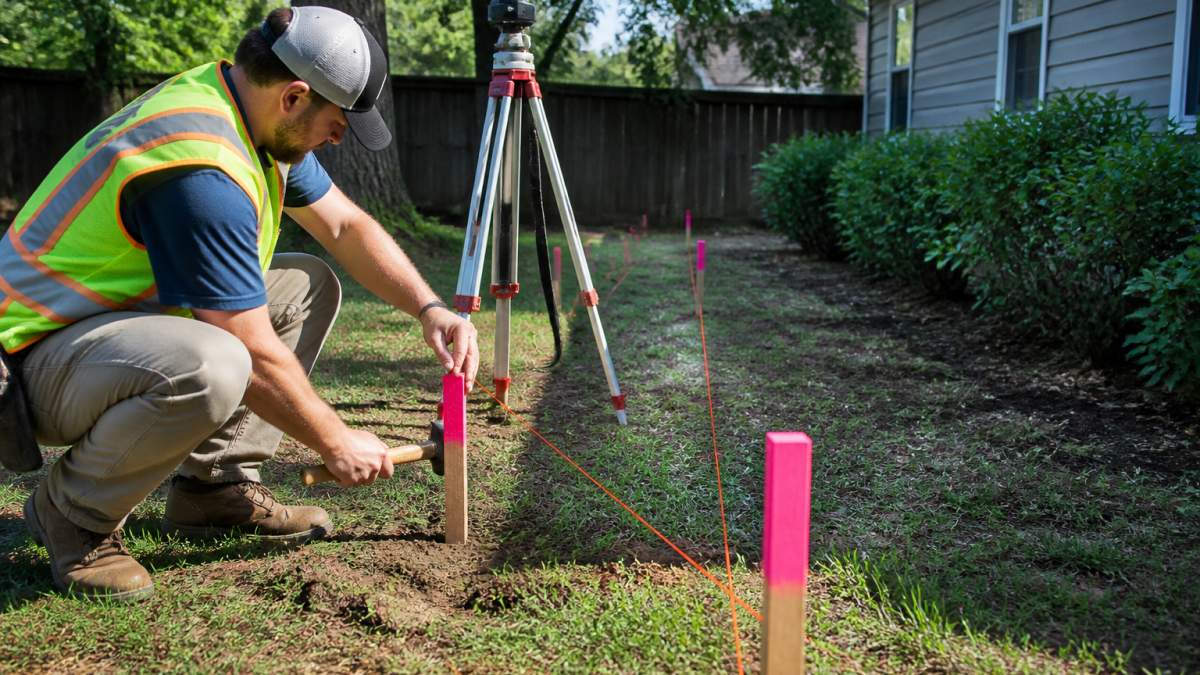
A surveyor uses recorded property documents and on-site measurements to establish exact boundary locations, placing stakes or markings at corners and along the line.
Shared fences on the actual property line create legal complexity. In many jurisdictions, both owners share maintenance and repair costs.
Check for utility lines before installation.
Fence Permit Inspection Requirements and Compliance
After installation, your local building department will schedule an inspection. The inspector verifies the fence meets approved specifications: correct height, proper setback from property lines, appropriate materials, and compliance with municipal codes.
Prepare by ensuring the fence is complete and matches the approved plans. If you made changes during installation (different material, adjusted height, modified location), notify the building department before inspection.
Upon passing inspection, you receive a certificate of compliance or similar documentation. Keep it with your property documents.
What to Do If Your HOA Denies Your Fence Application
Denial isn't the end of the process.
Request a written explanation.
Address the stated concerns directly. If your fence was too tall, propose a lower height.
Some denials rest on interpretation disagreements.
Most HOAs have a formal appeals process.
Consider consulting an HOA attorney if the denial seems arbitrary or significant investment is at stake.
The process protects both you and your community.
Frequently Asked Questions
What is the difference between HOA fence approval and a local building permit?
HOA fence approval comes from your homeowners association and ensures your fence complies with community governing documents, CC&Rs, and architectural guidelines. A local building permit comes from your municipal government and verifies the fence meets state and local building codes, setback requirements, and height restrictions. You typically need both: HOA approval first, then a municipal permit. Skipping either can result in fines, forced removal, or legal disputes.
What documents should I include in my HOA fence application checklist?
A complete HOA fence application checklist typically includes a written request, site plan or property sketch showing fence location and dimensions, photos of the proposed fence style and color, material specifications, contractor information, proof of property ownership, and any architectural drawings. Check your HOA's architectural review guidelines for their specific requirements. Some associations require a detailed timeline for installation and proof of liability insurance from your contractor.
Do I need a property line survey before installing a fence?
A property line survey is strongly recommended, especially if your fence will run along a boundary line or if there is any uncertainty about where your property ends. A professional survey prevents costly mistakes, disputes with neighbors, and violations of setback requirements. Many municipalities require proof of a survey before issuing a building permit. Your HOA may also require it as part of the approval process. The cost of a survey is far less than moving or removing an incorrectly placed fence.
What happens if I install a fence without HOA approval or a permit?
Installing a fence without HOA approval or a local building permit can result in violation notices, fines, mandatory removal at your expense, and legal action from your HOA or municipality. Your homeowner's insurance may also deny claims related to an unpermitted structure. In some cases, you may be required to pay HOA legal fees. Always obtain written approval from your HOA and a municipal permit before construction begins to protect your investment and avoid costly consequences.
How long does HOA fence approval usually take?
HOA fence approval timelines vary by community but typically range from 2 to 8 weeks. Some associations have 30-day review windows, while others may take longer if the architectural review committee needs additional information or if the application requires a formal vote. Check your HOA's bylaws or contact the board directly for their specific timeline. Plan ahead and submit a complete application to avoid delays that could push back your installation schedule.
What happens during a fence permit inspection?
A fence permit inspection verifies that your installed fence complies with local building codes, approved materials, height restrictions, setback requirements, and property line boundaries. An inspector will measure the fence height, confirm proper spacing from the property line, check that posts and materials meet code standards, and verify that the fence does not obstruct sight lines or encroach on public right-of-way. Inspections typically occur after installation is complete. If violations are found, you must correct them before receiving final approval.