Best Wood for Backyard Fences: 7 Options Compared
Table of Contents
- Quick Comparison: Best Woods for Backyard Fences
- Pressure Treated Pine vs Cedar Fence: Which Wins?
- Average Cost of Wood Fence Installation
- How Long Do Wood Fences Last?
- Wood Fence Maintenance Tips That Add Years
- Best Wood for Fence Posts vs Pickets
- 20-Year Cost-Benefit: Choosing the Best Wood for Backyard Fences
- Frequently Asked Questions
Last Updated: September 23, 2026
Quick Comparison: Best Woods for Backyard Fences
Choosing the best wood for backyard fences comes down to balancing rot resistance, structural strength, and long-term cost. Western red cedar and pressure-treated pine lead the pack for most homeowners, with redwood and cypress close behind in humid climates.
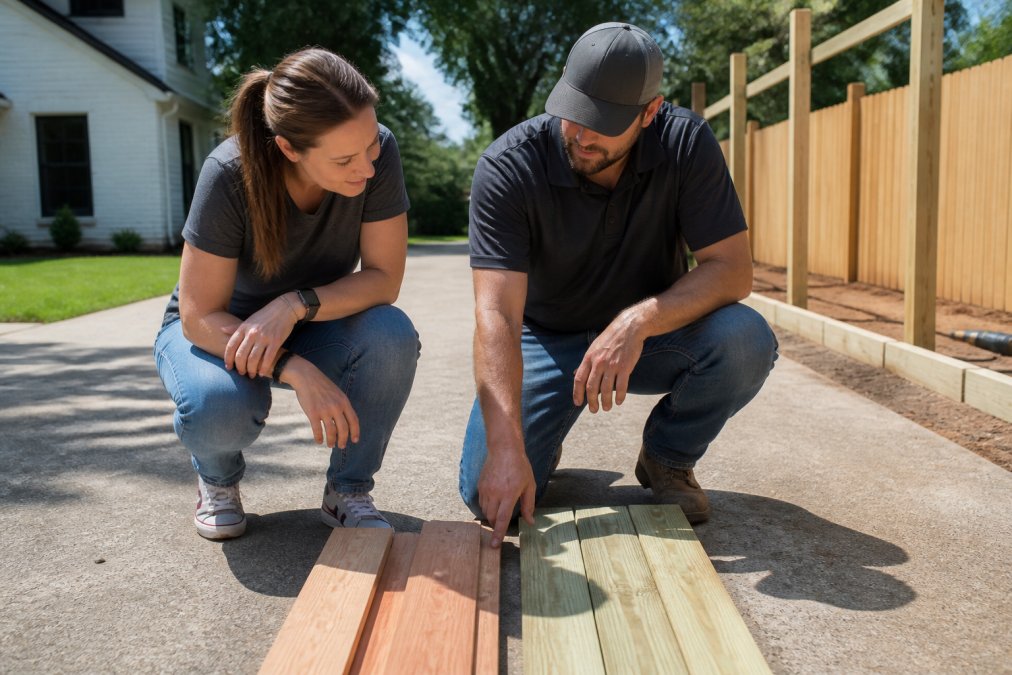
This guide from Fencementals breaks down seven options by durability, maintenance needs, and 20-year cost. Here's the short version before we get into the details:
| Wood Type | Rot Resistance | Best Use | Maintenance Level |
|---|---|---|---|
| Western red cedar | High (natural oils) | Pickets, rails | Low |
| Pressure-treated pine | Moderate (chemical) | Posts, framing | Medium |
| Redwood | High (tannins) | Pickets, posts | Low |
| Cypress | High (natural oils) | Pickets, posts | Low |
| Douglas fir | Low | Framing only | High |
| Spruce | Low | Budget pickets | High |
| Brazilian pine | Moderate | Posts | Medium |
Pressure Treated Pine vs Cedar Fence: Which Wins?
Cedar wins on natural rot resistance and appearance; pressure-treated pine wins on upfront cost and structural rigidity. The right pick depends on whether you're building posts, pickets, or both.
Average Cost of Wood Fence Installation
Wood fence installation costs vary widely based on wood species, height, terrain, and gate count. Most homeowners pay more per linear foot for cedar and redwood than for pressure-treated pine, but the gap narrows over time as maintenance costs accumulate.
What drives the material line item
- Species and grade. Clear-heart cedar and redwood cost more than knotty grades, and the price gap between them and pressure-treated pine is widest at the retail counter.
- Board dimensions. Thicker pickets, wider rails, and larger post dimensions all raise the per-foot material cost even when the species stays the same.
- Height. A 6-foot fence uses more board feet per linear foot than a 4-foot fence, and taller fences also need deeper posts and more concrete.
- Post spacing. Standard spacing is typically 8 feet on center, but windy or exposed sites often call for 6-foot spacing, which adds posts, concrete, and labor.
What drives the labor line item
- Linear foot of fencing (materials plus labor)
- Post spacing and depth (deeper footings cost more)
- Terrain grading for uneven yards
- Gate hardware and latch type
- Removal and disposal of an old fence
- Access, a backyard a wheelbarrow can reach is cheaper to fence than one that requires carrying every board through a side gate
Where the 20-year math changes the ranking
How to get a real number for your yard
How Long Do Wood Fences Last?
A well-built wood fence lasts 10 to 15 years for pressure-treated pine and 15 to 20 years or more for cedar, redwood, or cypress. Longevity depends on wood species, installation quality, and how consistently you maintain it.
Wood Fence Maintenance Tips That Add Years
Maintenance is what separates a 10-year fence from a 20-year fence. A simple annual routine prevents most premature failures.
- Inspect posts for soft spots or wobble each spring
- Re-tighten loose fasteners and brackets
- Clear vegetation and soil away from the base
- Apply a fresh coat of stain or sealer every 2 to 3 years
- Replace cracked pickets before water gets behind them
Best Wood for Fence Posts vs Pickets
Posts and pickets have different jobs, so the best wood for each isn't the same. This is the single most glossed-over point in most fence guides, and getting it wrong is the most common reason a fence fails early: homeowners pick one species for the whole project and then wonder why the posts rot while the pickets still look fine.
Why posts and pickets fail differently
Specifying the posts
- Use lumber labeled for ground contact. In pressure-treated material, that's the higher retention level; in naturally durable species, it means heartwood, not sapwood.
- Pressure-treated pine and pressure-treated southern yellow pine are the workhorses here because the treatment penetrates deep enough to protect the buried section.
- Cedar, redwood, and cypress can work as posts if you use all-heartwood stock and set them on a concrete footing or gravel base so the bottom stays out of standing water.
- Brazilian pine (often sold as a dense, naturally durable alternative) is a reasonable mid-tier post option in dry climates, but it is not a substitute for ground-contact-rated treated lumber in wet soil.
- Post diameter matters as much as species. A thicker post resists wind and soil movement better, and a 4x4 that is undersized for the height of the fence will lean no matter how rot-resistant it is.
Specifying the pickets
- Western red cedar, redwood, and cypress excel here because their natural oils and tannins resist rot and insects without treatment, and they hold stain and paint well.
- Cedar is the most widely available of the three and offers the best balance of price, stability, and appearance for most yards.
- Redwood and cypress are premium picks that perform best in humid regions where decay pressure is highest.
- Spruce and other low-cost softwoods can work as budget pickets, but expect more cupping, more frequent refinishing, and a shorter service life.
The mixed-species approach
20-Year Cost-Benefit: Choosing the Best Wood for Backyard Fences
Over 20 years, the cheapest wood at purchase rarely stays the cheapest. Total cost includes material, installation, maintenance, repairs, and eventual replacement.
Here's how the trade-offs stack up:
| Factor | Pressure-Treated Pine | Cedar | Redwood/Cypress |
|---|---|---|---|
| Upfront cost | Lowest | Mid | Highest |
| Lifespan | 10-15 years | 15-20 years | 15-25 years |
| Maintenance | Frequent resealing | Moderate | Low |
| Replacement cycle | 1-2 times | 0-1 times | 0-1 times |
Frequently Asked Questions
What type of wood fence lasts the longest?
Cedar, redwood, and black locust consistently outlast other options, with lifespans of 15 to 30 years when properly maintained. Cedar and redwood contain natural oils and tannins that resist rot and insects. Pressure-treated pine typically lasts 10 to 20 years. The actual lifespan depends on your climate, soil drainage, and whether you seal the wood. In humid regions, even rot-resistant species benefit from regular sealing to prevent fungal decay.
Is pressure-treated pine or cedar better for fencing?
Pressure-treated pine costs less upfront and resists rot through chemical treatment, making it a budget-friendly choice for backyard fences. Cedar costs more but offers natural rot and insect resistance without chemicals, plus better dimensional stability. Cedar also weathers to an attractive silver-gray. For homeowners who plan to stay long-term, cedar often delivers better value over 20 years. Pine works well for tighter budgets when properly sealed and maintained.
How much does it cost to install a wood fence per linear foot?
Wood fence installation costs vary by wood species, height, and site conditions. Cedar and redwood cost more than pressure-treated pine. Pricing depends on quantity, terrain, and local labor rates. Fencementals provides transparent, no-upsell pricing with no hidden fees. For a specific quote on your property in the Midlands, visit the Fencementals website or request a free estimate.
Does wood fencing require annual maintenance?
Most wood fences benefit from inspection once or twice a year and resealing every two to three years. Annual maintenance is not always required, but catching small issues early prevents costly repairs. Check for loose boards, insect damage, and moisture buildup around posts. Staining or sealing protects against UV damage, warping, and fungal decay. In humid climates, more frequent sealing may be necessary to extend the fence's lifespan.
What is the best wood for backyard fences in humid climates?
Cedar, redwood, and cypress perform best in humid climates because their natural oils and tannins resist rot and insects. Pressure-treated pine also works when rated for ground contact and properly sealed. Avoid untreated softwoods like spruce or Douglas fir for posts, as they decay quickly in moist soil. For fence pickets, cedar offers excellent dimensional stability and resists warping. Sealing the wood every two to three years adds further protection against moisture.
How do I choose the best wood for backyard fences on a budget?
Pressure-treated pine offers the lowest upfront cost and good rot resistance when rated for ground contact. Use pressure-treated pine for posts and rails, and consider cedar or redwood for pickets if you want natural resistance and appearance. This mixed approach balances cost and longevity. Focus spending on posts, since replacing them is the most labor-intensive repair. Request quotes from local contractors to compare installed costs, not just material prices.
Choosing the right wood is only half the equation. Installation quality determines whether your fence stands straight for 20 years or leans within three. Fencementals is a locally owned, veteran-operated contractor serving the Midlands, and we build wood, vinyl, and chain link fences with a focus on solid workmanship, clean work sites, and honest pricing with no hidden fees. Get a quote from Fencementals and get a fence built to stand the test of time.