Best Privacy Fence for Pets: 2026 Guide
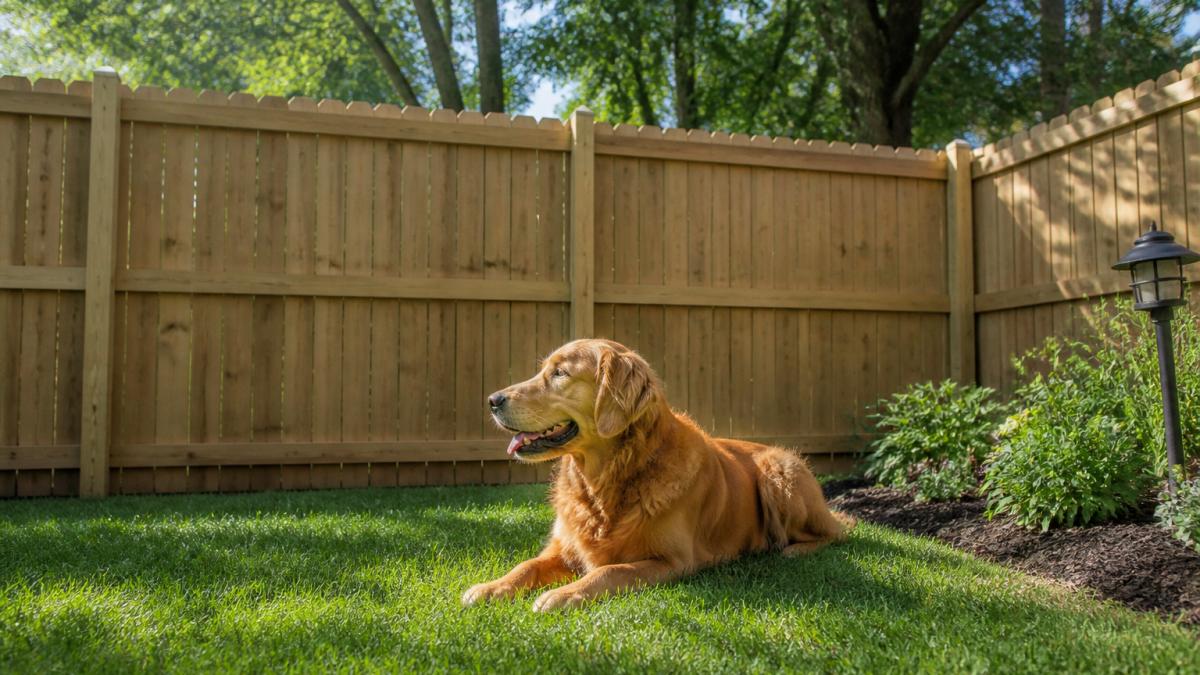
Table of Contents
- Why Privacy Fencing Matters for Pet Owners
- Privacy Fence Height for Dogs: Getting It Right
- Top Privacy Fence Options for Pets: Comparison Table
- How to Reinforce a Fence for Dogs: Escape Prevention
- Cost of Privacy Fence Installation: Budget Planning
- Material Durability and Maintenance for Pet Yards
- Which Privacy Fence Should You Choose?
- Frequently Asked Questions
Last Updated: October 2, 2026
Why Privacy Fencing Matters for Pet Owners
A privacy fence for pets creates a secure, distraction-free space where dogs relax without triggers. Dogs that bark at passersby, chase beyond the property line, or attempt escape need a solid barrier, not chain link. Owners report fewer anxiety-driven behaviors, less reactive barking, and dogs that stay contained.
The right privacy fence combines three critical elements: visual blocking (eliminating triggers), structural integrity (preventing breaches), and ground-level closure (preventing tunneling).
Privacy Fence Height for Dogs: Getting It Right
Most dogs clear 4 feet easily; a 5-foot fence is the practical minimum for medium to large dogs, 6 feet for jump-prone breeds.
Solid panels eliminate handholds that dogs can climb. For jumpers, install coyote rollers, angled toppers that roll inward, adding 6-12 inches of effective height without building a taller wall.
Ground-level closure prevents digging. Install the bottom panel flush with the ground, or bury wire mesh 12 inches deep and extend it 12 inches outward.
Top Privacy Fence Options for Pets: Comparison Table
| Fence Type | Best For | Visual Privacy | Durability | Maintenance | Escape-Proof Rating |
|---|---|---|---|---|---|
| Vinyl Privacy | Reactive dogs, noise reduction | Excellent | 15-20 years | Minimal | Excellent |
| Wood Privacy | Traditional aesthetics, budget-conscious | Excellent | 10-15 years | Moderate | Excellent |
| Metal Hog Wire | Large, high-energy dogs | Fair | 20+ years | Minimal | Good |
| DIY Modular | Renters, temporary solutions | Variable | 5-10 years | Variable | Fair |
Vinyl Privacy Fencing
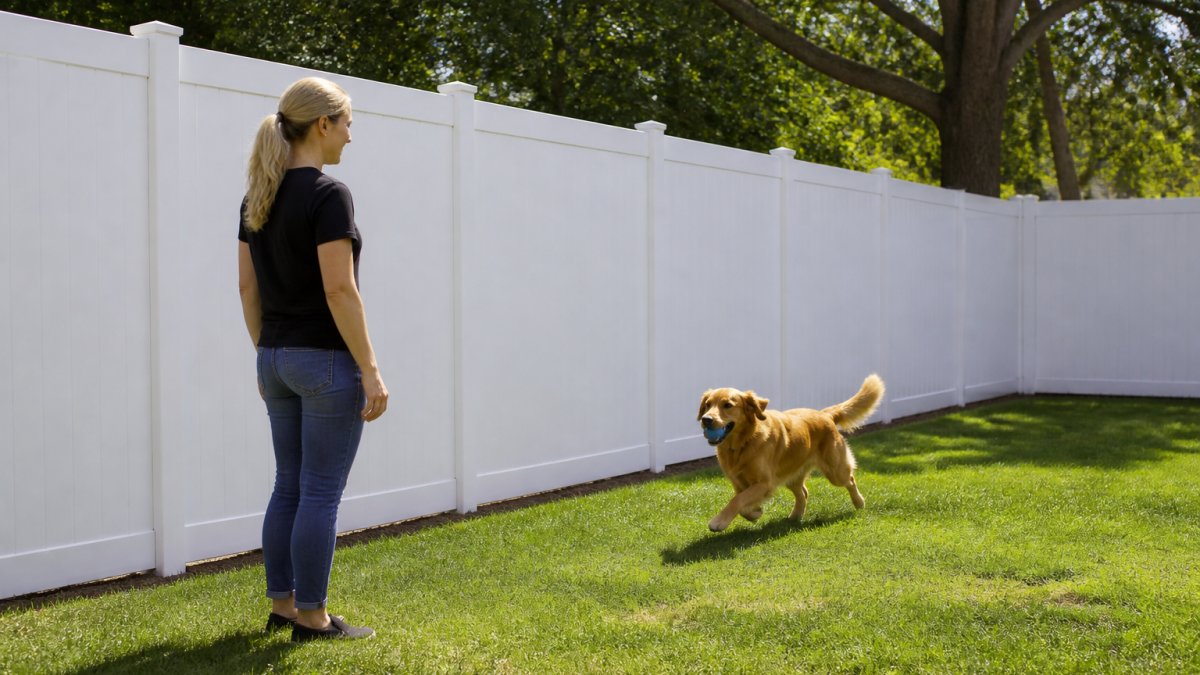
Vinyl privacy fencing is the lowest-maintenance option for pet owners. Solid panels eliminate visual distractions.
Vinyl panels sit flush to the ground, preventing digging. The smooth surface won't splinter or snag, and it resists rot, warping, and chewing.
Vinyl costs more upfront but lasts 15-20 years with minimal maintenance, no painting, staining, or sealing required.
Pros:
- Solid panels block visual triggers completely
- No maintenance, no painting, staining, or sealing
- Flush ground installation prevents digging
- Lasts 15-20 years
- Smooth surface won't splinter or snag
Cons:
- Higher initial installation cost
- Less traditional aesthetic than wood
- Can feel institutional in some designs
Wood Privacy Fencing
Wood privacy fencing delivers traditional aesthetics with solid-board construction providing complete visual blocking and escape prevention.
Wood requires painting or staining every 2-3 years. Moisture damage can shorten lifespan to 10-15 years, compared to vinyl's 20-year expectancy.
For pet owners willing to maintain it, wood offers aesthetic appeal and traditional feel. Proper post spacing and ground-level closure maximize durability and escape prevention.
Pros:
- Classic, attractive appearance
- Solid panels prevent escape and visual triggers
- Customizable height and board thickness
- Good value relative to vinyl
- Warm, natural aesthetic
Cons:
- Requires regular maintenance (painting/staining)
- Susceptible to rot and UV damage
- Shorter lifespan than vinyl (10-15 years)
- Moisture can create soft spots
Metal Hog Wire Fencing
Hog wire uses heavy-duty steel mesh welded to metal posts. It won't bend, warp, or break under impact. The open mesh design allows visibility, ideal for properties where sight lines matter but containment is needed.
The limitation is visual privacy, your dog can see everything outside, triggering reactive behavior in anxious dogs. The open design also provides handholds for climbers.
Hog wire excels for large, powerful breeds in rural settings. It's maintenance-free and lasts 20+ years.
Pros:
- Extremely durable, resists impact and chewing
- Maintenance-free
- 20+ year lifespan
- Allows sight lines for visibility
- Ideal for large, high-energy dogs
Cons:
- No visual privacy, doesn't block triggers
- Open mesh provides handholds for climbers
- Less attractive than wood or vinyl
- Doesn't reduce noise from outside
DIY and Modular Systems
DIY kits and modular fencing systems appeal to renters and budget-conscious owners, offering quick assembly without professional installation.
The appeal is lower cost and portability. The downside is durability, most DIY systems lack structural integrity, with posts often not sunk deep enough and ground-level gaps inviting digging.
Pros:
- Lower upfront cost
- Portable and removable
- Suitable for renters
- Quick installation
- Wide variety of materials
Cons:
- Less durable than professional systems
- May not meet local building codes
- Ground-level gaps common
- Structural integrity questions
- 5-10 year lifespan at best
How to Reinforce a Fence for Dogs: Escape Prevention
Reinforcement starts at ground level. Dig a trench 12 inches deep, lay hardware cloth or wire mesh, and extend it 12 inches outward to prevent digging under the fence.
For jump-prone dogs, install coyote rollers, angled toppers that roll inward, adding 6-12 inches of effective height.
Check for weak spots: loose boards, missing fasteners, rotted wood, or gaps where mesh has pulled away from posts.
Cost of Privacy Fence Installation: Budget Planning
Privacy fence installation costs depend on material, height, terrain, and local labor rates. Contact Fencementals for a free quote and transparent estimate.
Budget considerations include post spacing, ground-level reinforcement, and site preparation, details that affect long-term performance.
Calculate total cost of ownership over 15 years: vinyl costs more upfront but requires no maintenance; wood costs less but demands regular maintenance.
Material Durability and Maintenance for Pet Yards
Fence longevity depends on how material performs in your specific climate. A vinyl fence rated for 15-20 years may degrade in 10-12 years in high-UV or salt-air environments.
Vinyl in Different Climates
Vinyl performs well in moderate climates but becomes brittle and discolors faster in high-UV regions. Light-colored panels are particularly susceptible to UV fading.
In freeze-thaw cycles (northern climates with winter temperatures dropping below 0°F), vinyl can become less flexible and more prone to cracking, especially around fastener holes and seams.
Expectation adjustment: In high-UV climates, plan for 12-15 year lifespan instead of 20. In freeze-thaw zones, inspect seams and fasteners annually.
Wood in Different Climates
Wood is climate-sensitive and demands regional maintenance strategies. In humid subtropical climates (Southeast, Gulf Coast), wood rot accelerates dramatically.
In arid climates (Southwest, Mountain West), wood's enemy is UV damage and extreme temperature swings.
In freeze-thaw zones, water absorption followed by freezing expansion can crack boards and loosen fasteners. Spring thaw often reveals winter damage.
In temperate zones with moderate rainfall and mild winters, wood performs closest to manufacturer estimates: 10-15 years with standard 2-3 year maintenance cycles.
Metal Hog Wire in Different Climates
Metal hog wire's durability depends entirely on its rust-protective coating. Galvanized or powder-coated hog wire resists corrosion in most climates, but salt air is the exception.
In freeze-thaw zones, metal posts can heave (shift upward) as soil freezes and thaws. This loosens fasteners and creates gaps.
In arid climates, metal hog wire is nearly maintenance-free and lasts 20+ years with minimal attention.
Regional Maintenance Checklist
High-UV/Desert climates: Vinyl and wood both fade faster. Choose darker stains for wood (they hide UV damage better).
Humid/Subtropical climates: Wood requires aggressive maintenance. Vinyl is the better choice if budget allows. Inspect wood for soft spots quarterly.
Freeze-thaw zones: Metal posts must be set below frost line. Check all fasteners each spring.
Coastal/salt-air environments: Metal fasteners corrode faster. Vinyl resists salt better than wood. Rinse panels monthly during high-salt seasons.
Which Privacy Fence Should You Choose?
Choose vinyl if you prioritize low maintenance and long lifespan.
Choose wood if you want traditional aesthetics and are willing to maintain it.
Choose hog wire if you have a large, powerful dog and don't need visual privacy.
Avoid DIY systems for permanent pet containment.
A secure yard transforms your dog's quality of life. Reactive dogs relax when visual triggers disappear.
Fencementals specializes in pet-friendly fence installation with solid workmanship, quality materials, and honest pricing.
Get a quote from Fencementals and discuss your dog's specific needs with our team. We'll recommend the right material, vinyl for low maintenance, wood for traditional aesthetics, or hog wire for maximum durability, and install it with the attention to detail your pet deserves.
Frequently Asked Questions
How high should a privacy fence be to keep a dog in?
Most dogs require a privacy fence height of at least 4 to 6 feet, depending on breed and jumping ability. Smaller breeds and less athletic dogs typically need 4 feet, while large or jump-prone breeds require 5 to 6 feet. Some escape artists may need extensions or coyote rollers. Check local zoning ordinances, as many areas have maximum fence height restrictions around 6 feet for residential properties.
What is the best way to reinforce a fence for dogs that dig or climb?
Ground-level reinforcement is critical for diggers. Bury fencing 6 to 12 inches below the surface or install a dig-guard barrier along the perimeter. For climbers and jumpers, add fence extensions, coyote rollers, or angled toppers that prevent grip and launch. Ensure solid-board or wire-mesh construction with no gaps that allow escape, and check post spacing to prevent squeezing through.
Is vinyl or wood better for a dog-proof privacy fence?
Vinyl offers superior durability and requires no maintenance, making it ideal for pet owners seeking a long-term, low-effort solution. Wood provides a natural aesthetic and lower upfront cost but demands regular staining or sealing to resist weather and pet damage. For reactive dogs needing visual barriers, both solid-board styles work equally well. Vinyl's smooth surface prevents splinters, while wood may require sanding if dogs chew or scratch.
What does a privacy fence installation typically cost?
Privacy fence installation costs depend on material choice, fence length, terrain, and local labor rates. Vinyl generally costs more upfront but requires no ongoing maintenance. Wood is typically less expensive initially but requires regular maintenance. For a detailed estimate tailored to your property, contact Fencementals for a free quote on the pricing page, transparent pricing with no hidden fees.